 Flamingo
Colours go together in an outfit when they follow one of a few simple patterns. The safest is one colour with neutrals, such as a red jumper with jeans and white trainers. Next come shades of the same colour worn together, colours that sit next to each other on the colour wheel, such as blue and green, and opposite colours, such as blue and orange, where one stays small. A useful split is roughly 60% main colour, 30% second colour and 10% accent. Neutrals (black, white, grey, navy, beige, camel, brown and denim) go with almost everything and fill the gaps. Then there's the question of which colours suit you, which depends on your skin, hair and eyes. Flamingo reads your colour season from your selfie when you make your free AI avatar, and you can try any colour combination on that twin before you wear it.
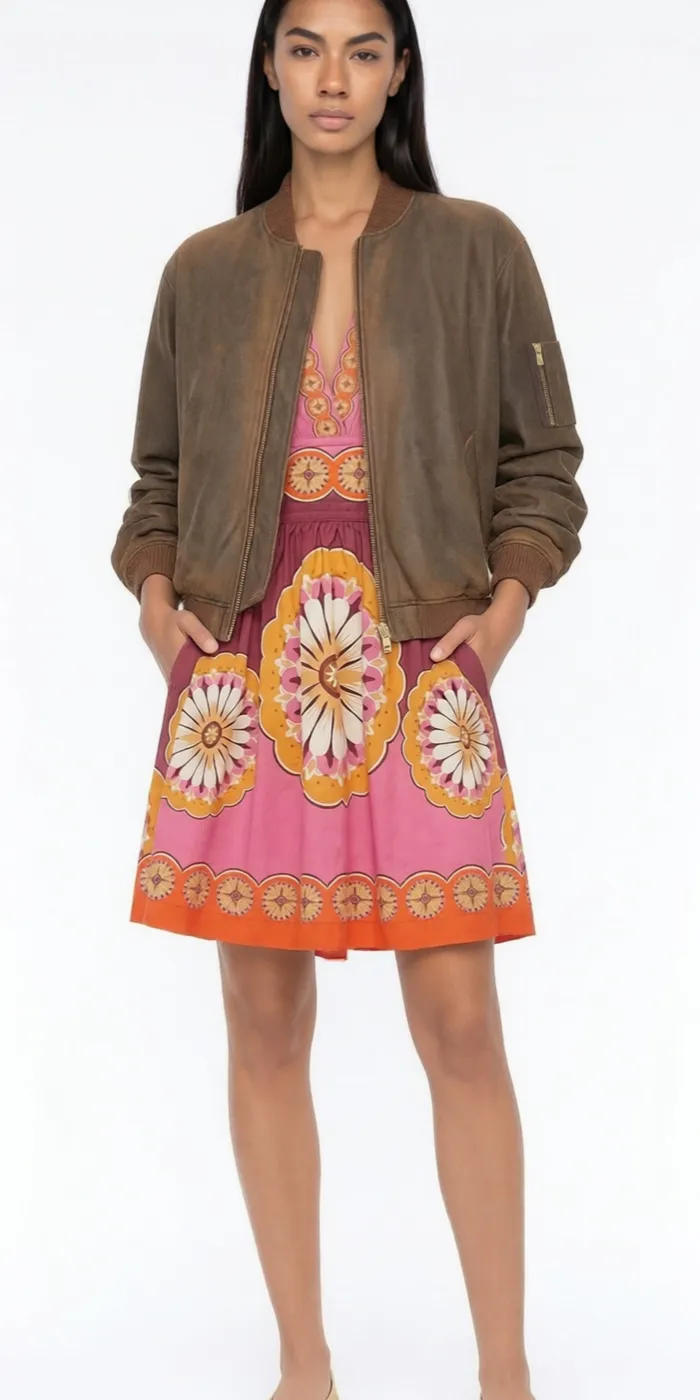
Which colours go with everything?
Neutrals. Black, white, cream, grey, navy, beige, camel, brown, olive and blue denim all mix with each other and with almost any colour. Build most of your wardrobe from two or three neutrals you like, and colour becomes easy to add.
Warm neutrals (cream, camel, brown) sit best with warm colours such as rust and mustard. Cool neutrals (white, grey, navy, black) sit best with cool colours such as cobalt and pink.
What are the main colour combinations for clothes?
- One colour + neutrals. A green coat with black and white. The easiest way to wear a bright colour.
- Tone on tone (monochrome). Several shades of one colour, such as light blue shirt, mid-blue jeans and a navy jacket. It looks calm and makes you look taller.
- Neighbouring colours (analogous). Colours next to each other on the wheel: blue with green, pink with red, yellow with orange. Soft and easy.
- Opposite colours (complementary). Blue and orange, purple and yellow, red and green. Strong contrast. Let one colour lead and keep the other small, such as a navy suit with a rust tie.
- Pastels together. Soft colours of the same lightness, such as lilac, mint and pale yellow, go together easily.
What is the 60-30-10 rule?
It's a rough split from interior design that works well for outfits. About 60% of what you see is the main colour, usually the trousers and coat. About 30% is a second colour, often the top. The last 10% is an accent in the shoes, bag, scarf or a print. You don't need to measure. It's a reminder that one colour should lead and the accent should stay small.
Which colours should I avoid wearing together?
Few combinations are banned, but some are hard to pull off:
- Two bright colours at full size, such as a bright red top with bright green trousers. Make one of them smaller or muted.
- Near-matches. Black with a slightly faded black, or two navies that don't quite match, look accidental.
- Too many colours. More than three noticeable colours, not counting neutrals, starts to look busy unless it's a single print.
How do I know which colours suit me?
Wear your best colours near your face. Hold different tops under your chin in daylight: colours that suit you make your skin look even and your eyes bright, and the wrong ones make you look tired. Seasonal colour analysis groups this into four palettes; read colour analysis from a selfie for how it works. Flamingo shows your season and five best-colour swatches when you make your twin, and it favours your palette when it picks looks for you.
How can I test a colour combination before I wear it?
Lay the pieces next to each other in daylight, or try them on your Flamingo twin. Pick the pieces in your closet and see the colours together on your own body and next to your own face. It's an AI image, so use it for colour and proportion, not exact fit.
Want to go further? Read how to put together an outfit and how to build a capsule wardrobe. Flamingo is on iPhone, Android and at app.tryflamingo.app. The closet, your twin and your colour season are free.